
Umesh Varma – Art in its truest and purest form

- Rajesh Eknath
Translated from Hindi by Aakshat Sinha

"A creation infused with the breath of life carries a living consciousness within itself."
on seeing a painting by Prabhakar Kolte, I was reminded of the works of Umesh Varma; this felt like a remarkable coincidence to me. Surprisingly, very little has been discussed about him or his art.
Sometimes, when our thought processes or artistic journeys converge at a single point, the experience bears witness to the transcendental power of art—a realm where creators from vastly different eras and environments find themselves in a shared state of mind, grounded in a universal consciousness.
The intricate web of lines (grid) and the celestial, lattice-like patterns found in the works of both Umesh Varma and Prabhakar Kolte serve as proof of this. This structural process demonstrates that the lines drawn on the canvas—and the geometric forms created where they intersect—transcend the boundaries of time to forge an eternal visual language. Here, the distinction of time dissolves, leaving behind only pure creation; even though the two artists possessed vastly different thought processes and artistic methods, their paths—perhaps unwittingly—converged at the same point upon the canvas.
At the core of this lay a unique, shared emotional landscape and a strong moral compass, driven by a shared worldview of life and existence that held the constant, self-evident, and experienced truth that all living and non-living creation is bound by a single thread.
So, let us speak of the artist who used to sing festive songs . . . "They sing auspicious songs in melodious voices; Hearing their sweet notes, the cuckoo itself feels put to shame." — Goswami Tulsidas
Initially, he seemed enigmatic to me; the man who appeared to be an ordinary elder—with his white beard, khadi kurta, and cloth satchel—was, in reality, an artist of deeply serious and philosophical nature. This very philosophical aspect manifests at the heart of his paintings, where the scattered energies and lines of the universe converge and settle upon a central focal point. Umesh Varma harbored a romantic affinity for folk music; whenever the mood struck, he would sing with great gusto:
"Oh friend, sing songs of celebration; adorn the earth and the heavens! Today, my beloved’s procession shall arrive. Oh friend, bring kajal; mark me with a protective black dot! Colors blend, fresh styles bloom; joy has pitched its tent at my doorstep today! The papiha (hawk-cuckoo) bird calls 'pihu-pihu,' the cuckoo chants 'kuhu-kuhu.' Fairies have gathered in every courtyard! Come together and play the celestial melody; today, my beloved returns home!"
He possessed a vast treasure trove of songs suited to the changing seasons and months, which he would render with profound emotion. His singing and his conversation complemented one another perfectly. Today, that innate talent and his deep connection to folk traditions leave behind a palpable void.
This experience clearly demonstrates that nothing in the world of art happens without reason. When a contemporary painting evokes the memory of a forgotten artist from the past, it becomes a priceless moment—for me, and perhaps for the art world at large.
I first met Umesh Varma in 1998 at the Garhi Art Centre; back then, I used to visit frequently to see Himmat Shah’s work. I used to feel apprehensive about meeting Umesh Sir, having heard the story of how the news of his mother’s sudden passing had plunged him into deep mental anguish. Rare interviews from that era reveal that, in the throes of his grief, he took his passport to the Indian Embassy and had his late mother’s name inscribed in it. It was a unique example of the administrative empathy that existed in those times. As a result of this mental turmoil, he had to spend some time in a psychiatric hospital in Japan; after making a partial recovery, he was sent back to India. His subsequent treatment took place at Safdarjung Hospital. In 1968, through the heartfelt efforts of his friend Manjit Bawa, he got married; thereafter, he dedicated himself fully to painting as his primary medium of expression and chose the Garhi Studios of the Lalit Kala Akademi as his creative base.
During an interview with Ashish Singh Rana, he recounted:
"My friends and family kept thinking I was a madman—a mental case beyond recovery. Fortunately for me, a year or two later, I was introduced to Dr.S. Datta Ray, a world-renowned psychiatrist. He has been my mentor ever since. I took him to my studio at Garhi to show him a painting and asked him to tell me whether it was a painting or not. 'If it is worthless, I will stop painting forever, right now.' He called me in one Saturday and congratulated me on an excellent painting. In his view, everyone is a 'mental case' because everyone possesses a psyche. 'You are a painter. If you can fulfill your responsibility towards your work, then that is perfectly fine by me.'"
Avani Sen used to say, "The line you draw has already been drawn and has become history. You cannot remove it. You cannot erase it. If you want another line, draw it over the original one with the exact same velocity you used for the first. History cannot be demolished."
He would often say, "Without velocity and a touch of madness, you cannot do justice to any field of work you choose. You want to paint." "Draw upon your momentum, the abundance of work, line, fields of color, composition, balance, music, and whatever else you wish to express."
They remind me of the time when Delhi's art scene was a new and unfamiliar territory for me.
Meeting, getting to know, and learning from senior artists has always been my nature. Stepping into Umesh Sir’s studio felt like entering a completely different intellectual realm. His way of thinking and communicating—his very thought process—was distinct from that of any other contemporary artist. His words held such profound meaning that one often felt a strong urge to record them verbatim; yet, this never happened—my own lethargic nature was a major obstacle in that regard.
My artist friend Pankaj Manav, whose studio was nearby, recalls:
"The mention of Umesh Varma ji brings to mind his works, which were steeped in mystery. His background as a science student was clearly evident in his art. It was in his nature to dissect words, deconstruct their roots, explore their multiple meanings, and peel back layers of thought—traits that were reflected in his paintings.
Despite being a painter, he worked like a scientist. For him, creating art was a profound intellectual and sensory exploration."
"Working alongside him at Garhi gave me the opportunity to observe him and his work closely. His dedication, his working methods, and his intellectual depth have always been a source of inspiration for me."
— Pankaj Manav, painter and sculptor, Delhi
That camp in Gwalior—that time in 2007—when, amidst artistic dialogues, the profound truths of life would suddenly reveal themselves. Under the heavy influence of alcohol, I had once described my own nature as that of a 'Rakshasa' (demon). With his characteristic smile and philosophical depth, Umesh Varma ji explained the definition of the word 'Rakshasa' to me—an explanation that can be easily grasped when viewed through the lens of his intellectual perspective:
According to Varma ji’s line of thought, the root meaning of the word 'Rakshasa'—derived from the Sanskrit root raksha—is directly linked to the concept of a 'protector' or 'preserver' (one who safeguards or cherishes something).
He explained that a true protector—or 'Rakshasa'—is someone who shields their culture, originality, inner artistry, and folk way of life from the market-driven forces of the outside world. When I labeled my nature as 'Rakshasa,' he did not view it negatively; instead, he saw it as the nature of a person ready to challenge established societal norms to safeguard their inner purity and artistic values. Perhaps he meant that preserving one's innate innocence and uninhibited nature amidst the cunning and pretension of the art world constitutes the greatest act of 'protection.'
He also frequently recounted the story of Drona and Ekalavya, always viewing the episode from a fresh and practical perspective. I do not recall the exact details, but I am attempting to reconstruct them—having refreshed my memory through a conversation with my friend, Vidya Sagar Singh.
In historical and mythological narratives, the incident of the thumb sacrifice is often portrayed as a result of a cruel social order or political compulsion. Conversely, understanding the technical and symbolic aspects hidden within this event offers a highly positive perspective.
This arrangement can be understood as a significant technical evolution in the art of archery. Traditionally, Kshatriya warriors primarily used their thumbs to draw the bowstring. By demanding Ekalavya’s thumb, Dronacharya steered him toward a technique that rendered the thumb unnecessary. Consequently, archers from tribal communities discovered a completely different and innovative method of shooting arrows, wherein the bowstring was drawn and released using only the remaining two fingers. Modern archery today appears to be based on this very scientific principle involving the fingers.
A shrewd and visionary teacher’s strategic maneuver may well lie behind this incident. As an instructor to royal disciples, Dronacharya was heavily constrained by the political equations, rules of royal patronage, and social pressures of the time; he was bound by state-mandated discipline. Imparting knowledge to an exceptionally talented and capable student within such a rigid system posed a significant challenge. To navigate this, he chose a subtle and ingenious path.
He devised this ruse to shield Ekalavya’s talent from the wrath of the ruling class and the harshness of the social order. The visible act of taking the thumb satisfied politicians and the influential elite that Ekalavya no longer posed a challenge. At the same time, Ekalavya gained a new and unique technique that further honed his abilities. This strategy reflects the inner dilemma of a capable teacher who ensures his superior knowledge is preserved for future generations without alerting the corridors of power. Thus, this anecdote illuminates a highly constructive, protective, and practical facet of the guru-disciple relationship.
Recounting these conversations is essential because they reveal the artist's temperament; observing this artist—who laughed heartily and expressed himself with uninhibited, fearless candor—from a certain vantage point is akin to witnessing the very authenticity of an artist’s craft. Even if he happened to get annoyed over something, he would be the first to step forward and resume the conversation. In the realm of contemporary art, any assessment of Umesh Varma is truly relevant only when viewed through the lens of his artistic journey, his creative process, and the benchmarks he established. He was a dedicated and brilliant modernist painter whose entire life was spent exploring the various dimensions of art and striving to preserve its originality. Like all true modernists, a distinct uniqueness was evident in both his life and his creative world. He advanced his artistic journey alongside stalwarts such as Jagdish Dey, Manjit Bawa, Satish Gujral, Krishen Khanna, and M.F. Husain.
Born in Uttar Pradesh, Varma was expected by his family to become a doctor. Even during his medical studies, the rebellious artist within him remained alive. Ultimately, he made the bold decision to abandon that path. Leaving medical science behind, he moved to Delhi with his brother, who was a writer and editor. There, he enrolled in the Art Department of the Delhi Polytechnic and made painting the central focus of his artistic pursuit.
Umesh Varma believed that art resides within the individual, while institutions merely teach various skills and techniques. His journey continued under the mentorship of distinguished professors—such as B.C. Sanyal, Dasgupta, Sailoz Mookherjea, Dinkar Kaushik, Somnath Hore, Jaya Appasamy, Biren De, Jagmohan Chopra, Rajesh Mehra, Naren Srivastava, and Kamal Sen—and with the encouragement of fellow artists.
Even before completing his formal education, he had established himself as a highly active organizer within Delhi's art scene.
During a stint in Japan on a prestigious scholarship, he undertook an in-depth technical study of folk ceramic art rather than traditional folk painting. This international exposure broadened his artistic perspective. Upon returning to India, he made the Garhi Art Centre (Lalit Kala Akademi) his creative base, where his creative process continued uninterrupted for decades. There, he experimented with visual art, transcending the boundaries of traditional mediums.
In the artistic landscape of Delhi, Umesh Varma established an identity as both an exceptional creator and a visionary organizer. Together with other talented contemporary painters, he formed a progressive art group named 'The Six'. The other artists in the group were Jagdish Dey, Manjit Bawa, Nilmoni Chatterjee, Durga Prasad, and Gokul Dembi. Between the 1960s and the early 1980s, the group 'The Six' held two or more exhibitions at AIFACS gallery.
The Indian art community of the 1970s and 1980s was undergoing a period of great upheaval and ideological ferment. During this era, art critics, thinkers, and fellow artists were deeply engaged in contemplating how Indian modern art could establish its own unique identity. There was a consensus within the art world that art needed to break free from the imitation of Western trends. A prevailing idea in the artistic discourse of the time was that painting should transcend the mere depiction of external reality and instead give expression to the human psyche, cultural heritage, and folk life. Against this ideological backdrop, the paintings of Jagdish Dey, Manjit Bawa, Nilmoni Chatterjee, Durga Prasad, and Gokul Dembi were viewed as a highly significant and revolutionary endeavor. The art community regarded this new path they had forged with great respect, curiosity, and appreciation. Critics believed that these artists had seamlessly integrated their local artistic traditions with global modernity.
The distinctiveness and significance of these artists' work remain enduring in the history of Indian art. Manjit Bawa introduced the art world to a completely new color sensibility. He entirely abandoned the chiaroscuro (light and shadow) technique characteristic of the British academic style. His paintings are defined by the use of flat, vibrant colors and well-proportioned figures that seem to float amidst them. He brought Indian mythology, Sufi philosophy, and the natural coexistence of humans with animals and birds onto the canvas. The greatest significance of his art lies in the creation of a poetic bridge between the fluidity of folk art and modern abstraction.
Jagdish Dey’s paintings offer a glimpse into a mysterious, dreamlike, and imaginative world. A distinct sense of stillness and spiritual tranquility permeates their composition. He combines human figures and elements of nature in such a way that the artwork begins to resemble a tale from another realm. Through the use of fine lines, translucent layers, and a highly nuanced application of color, his work takes the viewer on an introspective journey.
Nilmoni Chatterjee’s paintings display a beautiful blend of the gentle influence of the Bengal School and a modern rationality. The defining characteristics of his art are the rigorous discipline of line work and the emotive quality of his figures. He depicted the social fabric, human struggles, and folk life of his era with great depth and intensity. Within the art community of his time, he was recognized as an artist of ideas who successfully endeavored to capture the pulse of the times through his work.
Durga Prasad’s art reflects a deep connection to the soil and an abiding affection for folk life. The forms and themes of his paintings revolve around traditional Indian life, festivals, and folk symbols. He accomplished the commendable task of translating traditional folk art forms into the language of contemporary art. His primary significance lies in bridging the gap between classical art traditions and folk sensibilities, thereby giving rise to a new visual culture.
Gokul Dembi’s art bears the profound influence of the Kashmiri landscape—its light and the unique hues of its valleys. A distinctive feature of his paintings is that, rather than merely replicating nature...
The aim is to create an abstract transformation of the energy and beauty hidden within. Through the intensity of color and surface texture, he infused the canvas with a remarkable dynamism. He holds a distinguished place in the art world, thanks to his unique artistic vision that views nature through a fresh, philosophical, and modern lens.
As the artist himself put it:
"Art is the medium through which I express my personality."
Varma’s entire body of work strikes a beautiful balance between abstraction and modern forms. He avoided strictly adhering to pure abstraction, as he was never willing to sever his connection with human society and its inherent suffering. During a pivotal era in Delhi—when the city was defining itself politically and socially, and cultural power was concentrated in the hands of the elite—Varma forged a deep bond with the common people. The struggles and indomitable spirit of ordinary individuals emerged as the central themes of his paintings. During a particular period, he also created paintings from a scientific perspective, exploring the unresolved mysteries of the universe and celestial elements.
Umesh Varma’s paintings also bring Piet Mondrian to mind; a profound and contemplative geometric order lies at the heart of Mondrian's art. He completely eliminated curved lines from his work. His canvases are defined by the intersection of horizontal and vertical black lines, which cross at right angles to form rectangular and square grids. Within these grids, he combines primary colors—red, blue, and yellow—with white, black, and gray. Rather than relying on mathematical or symmetrical balance, he arranges the composition asymmetrically. This creates a unique visual equilibrium on the flat surface of the canvas, devoid of any three-dimensional illusion or sense of depth. Mondrian held original and philosophical views regarding this specific geometric configuration. He sought to liberate art from the imitation of nature's external forms. Believing that the visual appearances of objects are mutable, he considered it essential to deconstruct these external forms to arrive at the truth. For him, straight lines and primary colors were the means to reveal this immutable and eternal universal truth.
He viewed these lines as symbols of the two great opposing forces of the universe. In his philosophy, the vertical line signifies spiritual energy, activity, and masculinity, while the horizontal line represents worldliness, stability, and femininity. The intersection of these two lines expresses the ultimate balance and harmony of life. Mondrian advocated for keeping art entirely free from the artist's personal attachments, aversions, and ego, allowing the viewer to experience an impersonal and pure joy. He also held the visionary view that, in the future, art would transcend the confines of galleries to become an integral part of human life, architecture, and the environment. Thus, for him, this grid structure served as a medium to attain ultimate peace, order, and spiritual freedom.
In contrast, the interplay of geometric configurations and shapes in Umesh Varma’s paintings reveals a deeply profound artistic composition—works that appear to define his artistic identity. In his creative practice, the discipline of lines and the grid framework establish a foundation that divides the canvas into multiple levels. While Piet Mondrian limited his art to the pure abstraction of two-dimensional surfaces, straight lines, and primary colors, Umesh Varma steers this framework in a completely different direction. In his paintings, this geometry functions like a stage where various forms of life make their presence felt. A close examination of the paintings reveals that the geometry employed is entirely three-dimensional and dynamic. Instead of constructing simple square shapes, the fine, translucent lines drawn on the canvas create complex forms such as cubes, multidimensional lattices, and cosmic eggs. Within this mechanical and intricate structural arrangement, the artist integrates organic and spiritual forms—such as the swan, the lotus, the spiral, and the meditating Buddha. This composition highlights a beautiful harmony between the rigorous discipline of architecture and the spontaneous flow of consciousness. The work of another artist, G.R. Santosh, appears closely aligned with his style; while grids and geometric lines establish an intellectual balance in Umesh’s art, in Santosh’s paintings, grids, triangles, circles, and squares combine to create a spiritual and Tantric geometry. For him, the grid symbolizes cosmic energy and meditation.
The influence of Biren De—who was also his teacher—on Umesh Varma’s artistic world reflects a deeply natural and profound artistic connection. This vibrant exchange of ideas and visual language between master and disciple resonates at multiple levels within the composition of his paintings.
This influence and the interconnections between their artistic styles can be understood through certain distinct characteristics. A key feature of Biren De’s Neo-Tantric abstraction was the presence of a radiant light source or a concentrated beam of energy at the center of the canvas, from which angular and geometric lines appeared to emanate. This central arrangement of light and energy is clearly visible in Umesh Varma's paintings as well. In his work, too, geometric shapes and machine-like structures transform the center of the canvas into a magnetic focal point that draws the viewer's attention inward.
Biren De translated traditional Tantric symbols into modern abstract geometry. Umesh Varma expanded upon this approach; while embracing Biren De’s purely abstract Tantric framework, he wove organic forms, transparent cubes, and subtle spiral coils into it. The lattice-like yantras and ovoid shapes in his paintings appear to be an evolution of that very Neo-Tantric consciousness—characteristic of Biren De—which seeks to explore cosmic mysteries.
Biren De’s art was defined by a rigorous intellectual discipline regarding color and line, rooted in the spiritual principles of Tantra. This structural discipline is equally potent in Umesh Varma’s paintings. His transparent lines and multidimensional grids serve not merely as formal experiments but as expressions of profound philosophical contemplation. This artistic perspective clearly reinforces the influence of the mentor, wherein art transcends from being a mere visual object to become a medium for an inward, exploratory quest.
It can be unequivocally stated that Biren De’s Neo-Tantric artistic vision flows like an undercurrent through Umesh Varma’s paintings. He drew lessons on energy and geometry from his mentor’s Tantric abstraction and—by integrating his own distinct forms, memories, and human sensibilities—created a truly original visual language.

This creative endeavor can be philosophically interpreted as a synthesis of the inner and outer worlds. While the geometric framework on the canvas represents logical intellect, worldly order, and cosmic laws, the forms emerging from within give expression to human emotions, memories, and spiritual experiences. The transparency of the lines evokes the sense that human existence is enveloped by a vast cosmic structure, within which consciousness flows ceaselessly. Thus, the convergence of geometry and form in Umesh Varma’s paintings presents a rare and unique harmony of intellectual balance and spiritual depth.
Reflecting on how an artist evolves, he observes:
"Evolution is not merely an achievement; it is the natural rhythm of life. Time shifts at every moment. What has passed never returns in the same form, and the future brings its own new experiences. The artist, too, is part of this flow. Their inner biological time, sensibilities, memories, experiences, and the ever-changing world around them constantly transform them. This transformation sometimes leads them toward new directions and at other times inspires them to turn inward for introspection. It is within this continuous flux that the artist’s vision, language, and creative universe take shape."
His nature was infused with an innate, distinctive quality. While his contemporaries often resorted to artificial posturing in pursuit of fame and wealth, Varma remained entirely free from such pretenses. He was a fierce critic of the contradictions within contemporary art and the prevailing system. He felt a sense of kinship with all artists due to his open and progressive outlook; yet, in the pragmatic reality of the art world, his forthrightness often created an uncomfortable situation for his peers.
Umesh Varma’s artistic journey remained completely untainted by commercial mechanisms or market-driven maneuvers. While many of his contemporaries were preoccupied with instant fame, wealth, and creating art tailored to the preferences of galleries, Varma never compromised his artistic autonomy. He consistently kept his distance from the commercial labyrinths of art galleries and auction houses. His unwavering faith lay solely in his original thought process and the purity of his creative expression. During artistic dialogues, he would articulate his views on the contradictions of contemporary art with great incisiveness and refined language. This uncompromising stance earned him a distinguished and respected place among the artists of his time.
He expressed his views in a resounding voice and with absolute authority, even though other artists often shied away from grasping the depth of his words. His language was remarkably refined and articulate; yet, within art circles and forums, his sharp, forthright style of communication failed to garner the recognition it deserved. This manifestation of class struggle within the art landscape is both subtle and cruel—a realm where ideological purity and truth are frequently sidelined. His prolonged illness and growing detachment from art galleries were well-known facts. When a creator fades from the active scene, society often abandons even the formality of acknowledging their existence. The veteran artist is ultimately condemned to await death in a solitary world—a truly poignant situation. This prevailing indifference exposes the self-absorbed nature of the art world of that era. Varma belonged to that category of creators for whom displaying a 'commercial' affinity or taking pride in their artistic legacy offered no immediate, tangible gain.
He received the National Academy Award for Art—presented in Kochi, Kerala, in 2004—tad late in his career.
In the words of painter S.K. Sahni: when art is transformed into a commercial commodity and an artist's worth is determined solely by the sale of their works and market valuations, it is only natural for critics to offer such realistic assessments. Even in light of these bold and forthright statements, Umesh Verma will always be remembered as a genuine, courageous artist filled with compassion—one who regarded art not as a market commodity, but as the supreme spiritual pursuit of his life.
Those associated with institutions and art galleries often remember an artist only when he has reached the pinnacle of commercial success. This is a recurring process fraught with a sense of remorse, reinforcing the notion that artists are frequently denied the recognition they deserve during their lifetimes; Gaitonde and others stand as prime examples of this. The truth is that the value of material wealth is confined to the realm of the living; upon death, it becomes meaningless.
The thought became deeply ingrained in me that self-respecting artists inevitably have to endure the sting of oblivion. In the context of Umesh Sir, I feel one reason for this was a certain stagnation in his ideological stance over time. Despite his keen intellect, people began to drift away from him because his thinking ceased to incorporate the changes and innovations of the contemporary era. He remained steadfastly committed to his fundamental principles regarding life and art. For a creative individual, it is essential to keep pace with the times and embrace artistic innovation—a life lesson that many intellectuals fail to grasp. The inability to master the art of letting go, coupled with a persistent craving for recognition, ultimately leads to a tragic situation. It is deeply saddening that Umesh Varma could not fully internalize this truth before becoming completely bedridden in his final days.
Moving beyond the composition of a single painting by Prabhakar Kolte Sir, one arrives at the artistic universe of Umesh Varma Sir—a realm where the canvas transforms into a vibrant point of departure, linking together threads of memory, sensibility, and artistic movements. The dialogue begins on that shared plane and, carving its own path, enters the distinctive world of Umesh Varma’s art. This connection brings the vivid outline of their entire artistic journey and life before us, allowing their creations to engage in a direct dialogue with us.
When one explores the inner world of an artist, their solitude is invariably populated by their loved ones. Friends, fellow travelers, and artist-companions who shared their environment and lived life deeply alongside them naturally become part of this discourse. Through this connection, the artistic visions and struggles of all these individuals are also brought to light. It is an invisible thread; if we follow it, the process of dialogue deepens. This dialogue flows ceaselessly from one artist to another, and then to a third.

History and public discourse often center on artists shining at the pinnacle of success; everyone talks about them. Yet, I believe an artist’s eyes should hold a certain moisture—a tenderness—to ensure that human values remain intact within their vision. Parallel to this, sustaining the grandeur of those peaks requires a subterranean moisture that nourishes the entire artistic culture. Some artists act like the unseen backstage presence that provides a solid foundation for the visible spectacle. By keeping themselves away from the limelight, they preserve the human sensibilities and values inherent in visual art. This moisture lends a certain tenderness to our own gaze. When we view their work, a similar moisture wells up in our eyes—born of the art's true and guileless nature. Amidst the commercialism of the art world, the few remaining human concerns are preserved thanks to these silent devotees.
The primary objective of this entire process is to highlight the contributions of artists who are rarely discussed in the mainstream, despite fully deserving such recognition. Through the authenticity of their work and their profound dedication, these artists are entirely worthy of this respect. Art history attains its true meaning only when a narrative—originating from a single image—comes to encompass the life struggles of an entire generation of artists. This process must continue uninterrupted so that every significant voice finds its place within this tradition of creation.
Photos courtesy of Google.
The article was posted first on the writer's social media.
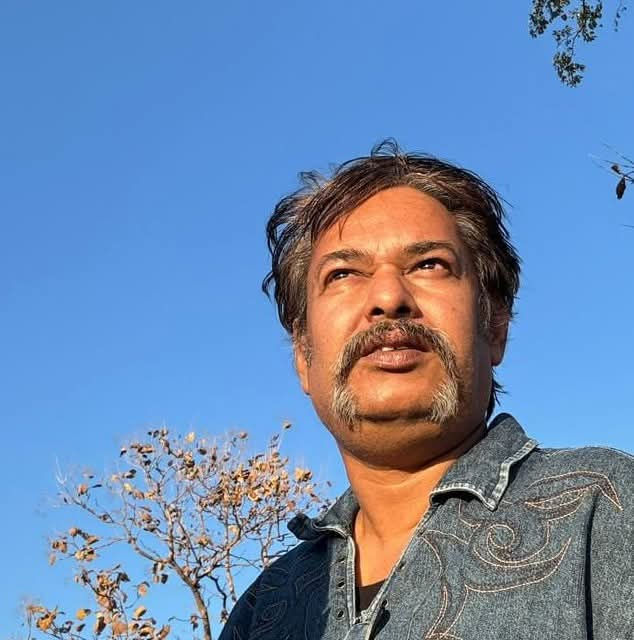
Rajesh Eknath is a freelance artist based in Pune with many solo and group exhibitions in India and abroad. He has curated many Indian and international exhibitions and festivals. He regularly writes articles for newspapers and posts articles on the social media about art and artists.
Comments