
Use of Idioms in Sculpture
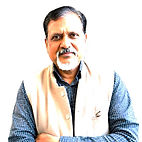
by Arvind Kumar
We are familiar with the use of idioms and proverbs in the prose of writers like Premchand in Hindi fiction, but they are not too often used in art.
This idiomatic expression in art was beautifully visible in the exhibition of a talented young artist held recently at the Bihar Museum in Patna. While many sculptors of the 20th century, from Ramkinkar Baij to Somnath Hore, have depicted folk life, the work of this Jharkand-born artist is somewhat different. In his works, we see at places a confluence of folk and modernity, a folk narrative of a small town.

Rajesh Ram, like a select few contemporary sculptors of the 21st century, has added a new dimension to sculpture, even as he extends of the 20th-century tradition.
Rajesh has titled this exhibition 'Kagaz Ki Kashti'' (Paper Boat). It is not a paper boat of a rich child in a metropolis, but a boat made by a young man from a small town. We have all floated paper boats in water in our childhood, knowing that these boats will dissolve and sink in the rain. But many times we have also seen them sail very far, even as they struggle.
Rajesh Ram has also filled in colours in many of his works They are not empty paper boats, but boats full of colours, with pictures, sculptures and paintings. The exhibition, which irresistibly drew the attention of art lovers, also included bronze sculptures, watercolours and sandstone works.
Rajesh Ram was born in undivided Bihar, so he still considers himself a Bihari. He received his education at Patna Art College and now lives in Delhi. He has versatile talent and immense potential. In my view, after Subodh Gupta, he is the second-most talented artist from Bihar whose works have drawn attention at the national level. He comes from a deprived community, so there is the soil of common life and rural life in his art.

When a large part of contemporary art has become limited and centered on urban and middle-class sensibilities, Rajesh has taken a different path. Perhaps it is the contribution of his life experiences and memories. He still connects his art to his childhood memories and surroundings. The rural mind and rural sensibilities within him have survived.
In many artworks like Jo Sovat Hai Vo Khovat Hai (He who sleeps, loses), Kala Akshar Bhains Barabar (Like letters before a buffalo - illiterate), Ghar Ki Murgi Dal Barabar' (Familiarity breeds contempt) and Sabzi Bechne Wali Ki Ladki (The vegetable seller's daughter), he has made artistic use of idioms. Few Indian artists have experimented like this before, where the culture of folk society is seen speaking, presenting a confluence of folk and modernity in art.
Rajesh has given artistic form to mythological characters in which a certain kind of modernity is also hidden, such as Ganesha and Bal Krishna made in terracotta and Kamdhenu made in bronze. He examines every object, history, myth and life from the perspective of art and lends it a new meaning, giving mythology a modern form. There is also a new experiment in his Krishna of Kaliyuga. He is a modern Kaliya Naag whom Krishna subdues, reflecting a deep vision of life and political-social consciousness. Although his artistic journey started with works like Natraj and Kali, he later changed his treatment with mythological characters. As his art has matured, he has added deeper meanings to it.
Mask Off is an important work in which he has shown humans in various forms. This is not just an image of connecting humans with wild animals, but also depicts the animality hidden within humans. It is a story of the humanization of wild animals and the animalization of humans. This dialectical relationship needs to be understood in the development of civilization.

Rajesh Ram's works in ceramic are equally good. He works in every medium and has considerable experience of working in various mediums. In the coming years, he will undoubtedly be recognized as a great artist and will bring glory to both Bihar and Jharkhand
I recommend that a joint exhibition of the sculptural masters of the 20th century and the best sculptors of the 21st century is held in the near future so that the new trends in sculpture can be better known and understood. It would be useful to have a discussion on how Indian sculptors have advanced the work of artists like Amarnath Sehgal and Himmat Shah in the last 25 years. And how these artists are shaping this century. In these 125 years, not only has the country changed, but art life and art culture have also changed. Rajesh Ram's contribution in this regard is highly significant.
(Photos are courtesy Arvind Kumar and the artist, Rajesh Ram.)

Arvind Kumar is a Delhi-based senior journalist.
(The views and opinions expressed by the contributors in their articles, features, and interviews on artamour are solely those of the individual authors/artists and do not necessarily reflect the views of artamour or its owners.)


Comments